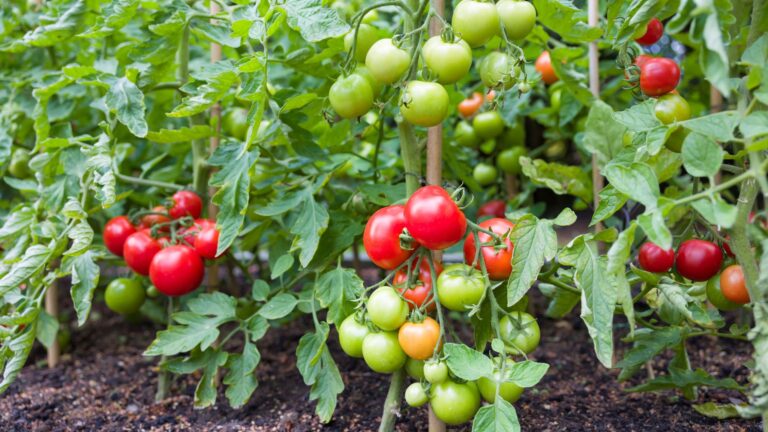
OK, I’m still on my metaphor kick– Back in 2016, I wrote a whole piece here on the orchard and the orchardist, and a couple of years ago, I spun up the concept of Agilists as gardeners–especially gardeners of an Agile culture– as a way of introducing myself to the teams in an organization in which I had just started working. Now that AI is becoming a major factor in everyone’s SDLC, I thought this might be a good time to brush those ideas off and bring them together in a new way.
Agilist’s Role
For Agilists, the garden is our organization’s culture, the plants and their fruit are good process, and the consumers of that food are the team members and their managers–and in extension, our product end-users. In the middle is us, digging, turning, cultivating, improving.
That garden is still there. What’s changed is how we tend it. Most of us don’t walk into empty patches of bare soil anymore. We walk into something already growing—some of it healthy, some of it tangled, some of it quietly competing for light. Agile has been around so long now that it is pretty rare that our work is to start a garden. Instead, it’s often about understanding the one that’s already there… and deciding what deserves more space.
The newer tools like AI agents, skills, agentic swarms, whatever we’re using and whatever label we give them, start to matter here. We could think of them as irrigation that notices patterns we’d otherwise miss. They’re not a hose or even drip irrigation, but a system that can sense soil moisture content early, before the leaves curl, before the team feels the strain. They can sense stories that arrive half-formed, acceptance criteria that never quite root, planning sessions that drift… small signals, easy to ignore in isolation, but consistent when we step back, or when we have a tool that handles the mundane task of monitoring
So instead of reminding every team, every sprint, every time… the system nudges, quietly, consistently, without fatigue. The gardener isn’t spending the morning dragging water from row to row, or poking their finger in the soil to check for moisture. They’re looking at the shape of the garden again. (OK, they might actually like to occasionally poke their finger in the soil because that provides a sense of connection that gardeners love–but the point is that it’s not a required daily action anymore).
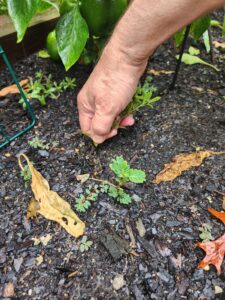 Weeding shifts too. Because weeds in a culture garden rarely look like weeds at first. They look like “one more simple step,” or “we’ve always done it this way,” or “this helps us feel safe.” They grow fast because they’re familiar. They spread because no one has time to question them. Manual weeding works, but it’s reactive. We notice the overgrowth when it’s already competing with what we meant to plant. Now imagine something that keeps watch—not deciding what’s a weed, but surfacing where growth is crowding out intention. things like duplicate workflows across teams, stories that expand without clarity, retros that repeat the same themes without movement. That changes the conversation. Instead of “why are we doing this,” it becomes “do we still want this here?” And the gardener stays in the loop, which matters more than most people admit. The moment we hand over judgment, we stop gardening and start just. . . operating.
As I’m thinking through this more, I realize that planning is where tension shows up the most. There’s a temptation here in this metaphor to suggest that AI becomes the master garden planner—mapping the entire season, predicting yield, optimizing every square inch. It’s neat. It’s efficient. It’s also very disconnected from reality the moment conditions shift. Gardens don’t behave like that. Neither do teams. Curse you Reality!
AI’s Role
A better image is AI in a quieter role. It can be something that remembers what actually happened last season, not what we hoped would happen. It can be something that shows which crops took longer than expected, which ones failed under pressure, which combinations thrived in our specific conditions, not in theory, but here. So when we’re deciding what to plant next, we’re not guessing in the dark. We’re choosing, but now with better context.
And maybe that’s the line to hold. AI helps us see the garden more clearly. It doesn’t decide what the garden should become.
That’s where the cultural layer that tends to get overlooked comes in. Healthy gardens invite contribution. People notice things. They try small changes, pull a weed without being asked, and share what worked. If the tools we introduce feel like something only a few people understand, or worse, something that evaluates from a distance, we lose that. The garden becomes something maintained for the teams instead of with them. If tools are so complicated that the gardeners can barely get time to actually garden, we’re definitely going in the wrong direction.
But if the right tools help someone write a clearer story, or spot a dependency earlier, or walk into a retrospective with something more concrete than memory, then they start to feel like part of the soil itself. Supportive. Expected. Unremarkable in the best possible way.
Most organizations already have seeds planted in good soil. The role of the Agilist hasn’t been to take over the garden, and it doesn’t become that now.
It’s still about tending conditions.
Still about noticing what’s helping and what’s crowding things out.
Still about creating a place where people want to participate.
The tools can make it easier to keep up with what’s already happening.
If we let them.
